
How to Review a Contract Before Signing: Clauses and Warning Signs
A structured review can reveal obligations, costs, renewals and risks before your signature turns the document into a commitment.
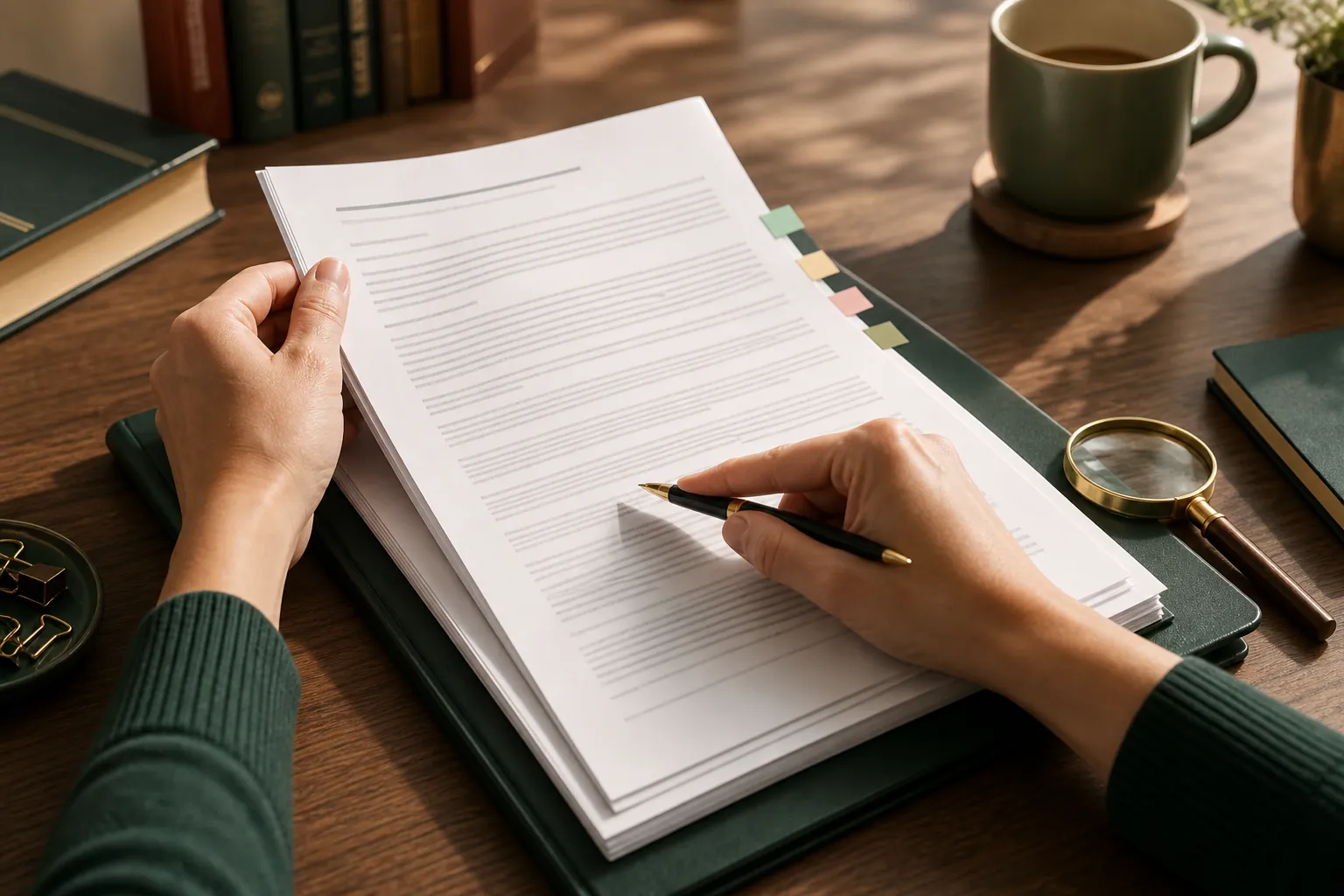
Signing a contract may feel like the final step in a decision, but legally it is the beginning of a relationship with rights, obligations and consequences. A rushed reading can miss details such as automatic renewal, an additional charge or a cancellation process you did not expect.
You do not need to master every legal expression to carry out a useful first review. The aim is to understand the structure of the agreement, locate the points that may affect you and identify the questions that need answers before you sign.
Check who is signing and what is being agreed
Start by identifying the parties correctly: name or company name, identification details, address and authority where someone signs for a business. Then summarise the purpose of the contract in one sentence. If you cannot explain clearly what each party receives, the document deserves a closer reading.
Review any schedules, quotations and standard terms mentioned in the document. A reference to another file may incorporate obligations that do not appear on the main page.
Find the price, deadlines and exit route
Check the total price, taxes, additional charges, payment method and consequences of delay. For ongoing contracts, find the start date, minimum term, automatic renewal provisions and notice period for cancellation.
The exit matters as much as the entry. Identify when the contract may be terminated, how notice must be given and whether penalties apply. A clear clause should allow you to anticipate both the cost and procedure of ending the relationship.
Look for imbalance and ambiguous language
Pay attention to powers that only one party can exercise, price changes without an understandable basis, broad waivers of rights, limits on liability or vague phrases such as “when considered appropriate”. Ambiguity does not automatically make a clause invalid, but it is a sound reason to request a written explanation.
Also check which law applies, where disputes would be resolved and which forms of notice are valid. These details can significantly change the practical difficulty of bringing a claim.
Complete a final check before signing
Make sure there are no blank spaces, every page belongs to the same version and any agreed amendment appears in writing. Keep a complete, dated copy together with messages or documents that explain how the agreement was negotiated.
An AI tool can help summarise clauses and prepare questions, but it does not know the full context or replace professional review. If substantial money, a guarantee, a waiver of rights or a difficult-to-assess risk is involved, speak to a qualified lawyer before committing.